
Overview
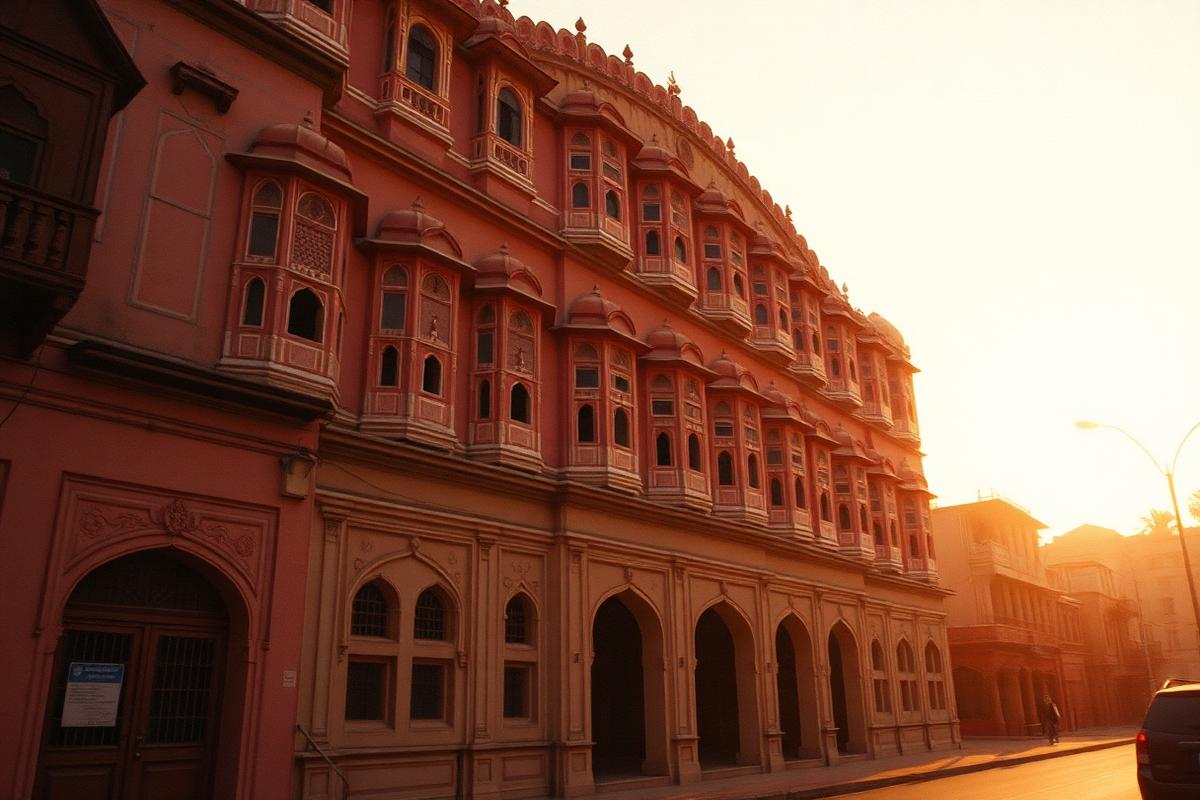
Jaipur was laid out in 1727 on a grid, which makes it unusually easy to navigate for an Indian city of three million people. The walled old city, painted terracotta pink since a royal visit in 1876, holds the City Palace, Jantar Mantar's astronomical instruments and the bazaars that still supply most of the state's jewellery and textiles.
Almost every first-time visitor arrives here as part of the Golden Triangle. What separates a good Jaipur stay from a rushed one is time in the workshops — block printers in Bagru, blue potters in the old city, gem cutters in Johari Bazaar — rather than another fort.
Why visit Jaipur
- Amber Fort, best seen in the first hour after opening before tour groups arrive.
- Craft workshops you can visit properly: block printing, blue pottery, hand-cut gemstones.
- The most comfortable heritage hotel market in India, from ₹2,500 guesthouses to former palaces.
- A logical hinge point between Delhi, Agra and the rest of Rajasthan.
Best time to visit
October to March
Sightseeing weather. December and January mornings can drop near 8°C.
April to June
40°C+ regularly. Do forts at dawn or not at all.
July to September
Occasional heavy rain, dramatic light, lowest hotel rates of the year.
How to reach Jaipur
From Delhi
Vande Bharat and Shatabdi trains take roughly 4–5 hours; the expressway drive is about 5–6 hours.
From International arrivals
Jaipur (JAI) has limited international flights; most travellers land at Delhi and continue by train.
From Agra
About 4–5 hours by road, or a direct train. Fatehpur Sikri fits neatly en route.
Getting around
- App-based taxis are cheap and avoid haggling; autos are fine for short hops if you agree a price first.
- The old city is genuinely walkable, but pavements are inconsistent and traffic is constant.
- A half-day car hire covers Amber, Jal Mahal and Nahargarh comfortably.
Where to stay
Old City / Walled City
Closest to bazaars and the City Palace; noisier, more atmospheric.
Civil Lines / Bani Park
Quieter heritage guesthouses, 10–15 minutes from the sights.
Amer road
Boutique properties near the fort; you will drive into town for dinner.
Things to do
Amber Fort at opening
Walk up rather than taking a jeep; the ramp views are the point.
Block-printing workshop
Half a day in Bagru or Sanganer, hands on cloth.
Jantar Mantar with a guide
The instruments make no sense without one.
Old city food walk
Early evening, when the sweet shops refill.
Food to try
- Dal baati churma and laal maas are the Rajasthani dishes to try, though laal maas is genuinely fiery.
- Kachori and pyaaz kachori from a busy sweet shop — busy means high turnover, which means fresher oil.
- Lassi in a clay kulhar at a shop that makes it in front of you.
Culture and context
- Jaipur's craft economy is real and family-based; buying directly from a workshop matters more than the shop's marketing.
- Commission culture is strong. Drivers and guides may steer you to shops that pay them. Say clearly at the start where you want to go.
What to wear
- Light cottons, shoulders and knees covered for temples and the City Palace.
- Closed shoes for fort steps and cobbles; sun hat and sunglasses year-round.
- A light layer for December and January evenings.
Etiquette
- Ask before photographing people, especially women and inside temples.
- Remove shoes at temple entrances and at some shop showrooms.
- Bargain politely in bazaars; in fixed-price government emporiums, don't.
Safety
- Jaipur is a well-policed tourist city; the common issues are commission scams and overcharging, not violence.
- Use prepaid or app-based taxis at night rather than street autos.
- Check your government's current travel advice before you travel; conditions and advisories change.
Sample itineraries
Two days in Jaipur
- Day 1: Day 1 — Amber Fort at opening, Panna Meena stepwell, afternoon City Palace and Jantar Mantar, evening bazaar walk.
- Day 2: Day 2 — Block-printing workshop, lunch, Nahargarh for sunset over the city.
Practical tips
- Buy Amber Fort tickets online where possible to skip the counter queue.
- The composite monument ticket can save money if you plan to see three or more sites.
- Monkeys at Galtaji are bold — carry nothing loose and don't feed them.