
Overview
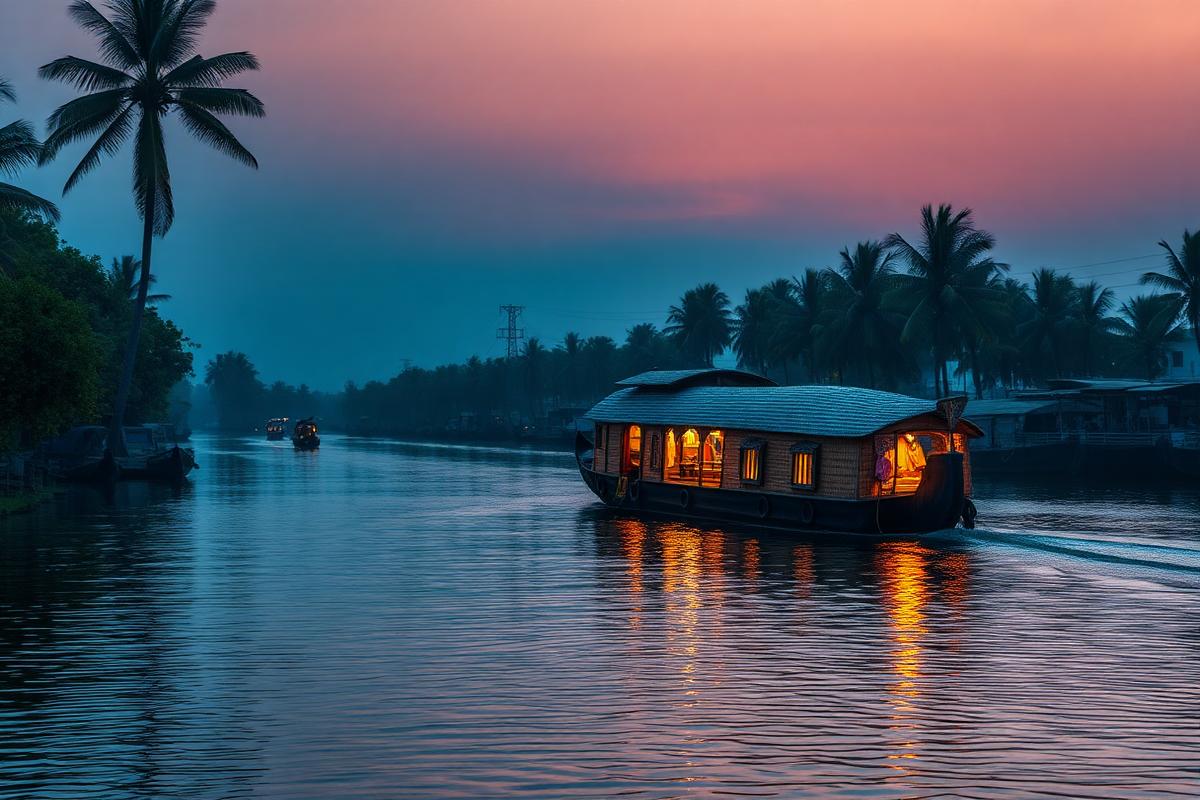
Alappuzha sits on a network of canals and lakes where much of the farmland lies below sea level, protected by bunds. It is the main departure point for houseboat cruises, and also the easiest place to see backwater life without a boat at all — the public ferries cost a few rupees and run through the same villages.
The town itself is workaday. The reason to come is the water: rice barges converted into houseboats, canoe trips down channels too narrow for them, and homestays where the family's kitchen faces the canal.
Why visit Alleppey (Alappuzha)
- One night on a houseboat is a genuinely distinctive Indian experience, not a manufactured one.
- Village canoe trips reach places houseboats physically cannot.
- Kerala's snake boat races, if your dates line up with the local festival calendar.
- It combines easily with Fort Kochi (about 1.5 hours) and Munnar (about 4 hours).
Best time to visit
November to February
Dry, warm, the peak booking window. Reserve boats early over the holidays.
March to May
Hot and humid on the water; boats are cheaper.
June to September
Monsoon. Very green, very cheap, and rain squalls can be heavy.
How to reach Alleppey (Alappuzha)
From Kochi (COK airport)
About 2 hours by road, or a train to Alappuzha station plus a short auto ride.
From Munnar
Roughly 4–5 hours by road through the tea hills.
From Thiruvananthapuram
About 3 hours by road, or a scenic coastal train.
Getting around
- Autos in town; boats for everything else.
- State-run ferries between Alappuzha and Kottayam are cheap, slow and excellent.
- Bicycles work well along the bunds outside the monsoon.
Where to stay
On a houseboat
One night. Boats moor before dark by regulation on most routes.
Canal-side homestay
Often the better experience — you meet people rather than a crew.
Marari beach
20 minutes away, quiet sand, good for adding two lazy nights.
Things to do
Sunrise canoe through the narrow canals
Leaves before six; the best two hours of the stay.
Public ferry to Kottayam
Two and a half hours, costs almost nothing.
Toddy shop lunch
Local, loud, excellent food.
Food to try
- Karimeen pollichathu — pearl spot fish grilled in banana leaf — is the local dish to order.
- Toddy shops serve fiery, excellent food; go with a local or a guide the first time.
- Houseboat food is usually cooked fresh on board and is a highlight; tell them your spice tolerance honestly.
Culture and context
- Backwater villages are private homes, not scenery. Photograph people only with permission.
- Many houseboat crews come from the same villages you pass; they are worth talking to.
What to wear
- Light, quick-drying clothes; a rain layer between June and September.
- Modest swimwear only where the property clearly supports it — this is not a beach resort culture.
- Insect repellent for dusk on the water.
Etiquette
- Keep noise down after dark; boats moor beside residential canals.
- Don't buy from vendors who paddle up to boats selling live fish or prawns unless you know the source.
Safety
- Check for life jackets before boarding any boat, including canoes.
- Avoid swimming in the backwaters; water quality is variable and there is boat traffic.
- Choose a licensed operator — the state registers houseboats, and registration is worth asking about.
Sample itineraries
Two nights in the backwaters
- Day 1: Day 1 — Board a houseboat at midday, cruise, moor by evening.
- Day 2: Day 2 — Disembark after breakfast, move to a canal-side homestay, sunset canoe.
Practical tips
- One houseboat night is plenty; add the second night on land.
- Book directly with a registered operator rather than through a street agent.
- Ask whether the boat has an air-conditioned cabin and when the generator runs — most only run it at night.