
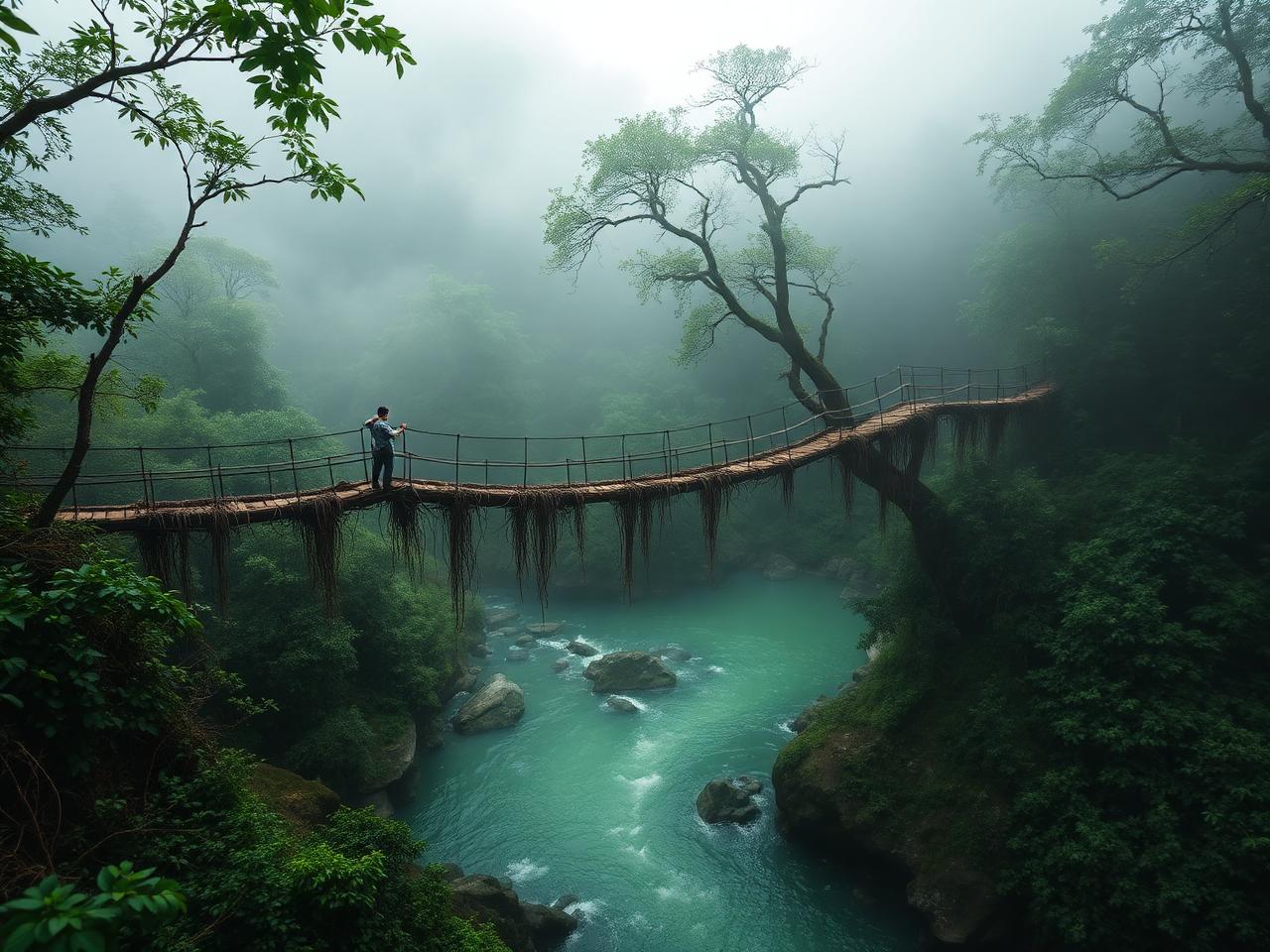
Rainforest, river islands and living cultures
Northeast India travel guide
Eight states east of Bangladesh with a completely different cultural map to the rest of India. Fewer travellers, more logistics, and some of the most rewarding landscapes in the country — living root bridges, the Brahmaputra's river islands, and Himalayan valleys on the Tibetan frontier.
Permit requirements for foreign nationals in some northeastern states change from time to time. Always confirm current rules with the Bureau of Immigration before booking non-refundable travel.
Why visit Northeast India
- Meghalaya's living root bridges and canyon waterfalls — a two to three day walking region in their own right.
- Kaziranga in Assam, the best place in the world to see the greater one-horned rhino.
- Tribal and community-run tourism in Nagaland, Arunachal Pradesh and Meghalaya.
- Genuinely low visitor numbers outside the Hornbill Festival period.
Best time to visit
October to April
Driest and clearest. Kaziranga is typically open November to April.
May to September
Very heavy rain — this region includes some of the wettest inhabited places on earth. Landslides can close roads.
Highlights
Living root bridges, Meghalaya
The double-decker bridge is a hard 3,000-step descent and return.
Kaziranga National Park
Jeep and elephant-back safaris; check current park opening dates before booking.
Majuli, Assam
A vast river island of monasteries and mask-makers.
Northeast India travel FAQs
Do foreigners need permits for Northeast India?
Some states require a Protected Area Permit or Inner Line Permit for foreign nationals, and the rules change. Check current requirements with the Bureau of Immigration or ask us before you book internal flights.
Is it suitable for a first trip to India?
It can be, if you like walking and don't mind long drives. It suits travellers who have already done a classic circuit, or who came specifically for nature and culture rather than monuments.
Talk to a planner