
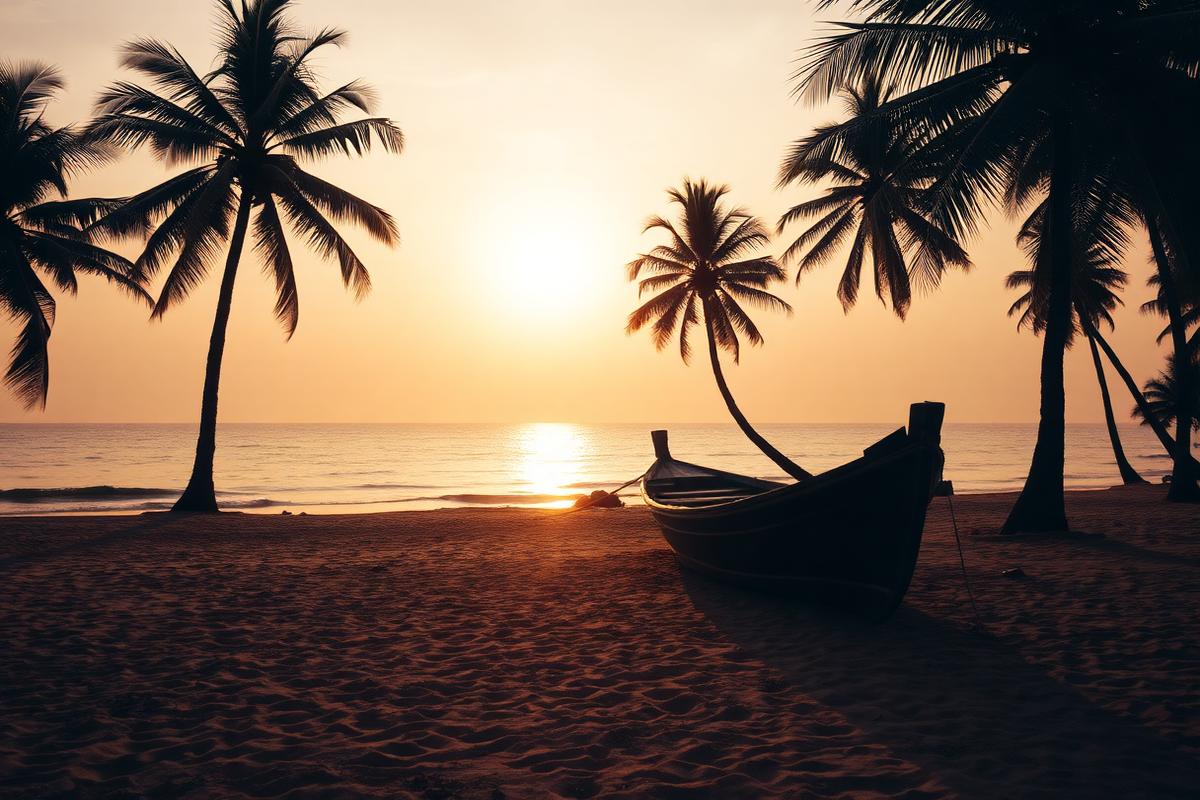
Coastline, Portuguese-era towns and a long lunch culture
Goa travel guide
India's smallest state, and the one most travellers use as a decompression stop. North Goa is busy and social; the south is quieter and more expensive; inland Goa has spice farms, river ferries and Latin-quarter architecture almost nobody visits.
Official sources
Why visit Goa
- A genuine beach break in the middle of a demanding itinerary.
- Goan food is its own cuisine — vindaloo as it should be, xacuti, and river fish curries.
- Panjim's Fontainhas quarter and the churches of Old Goa.
- Easy scooter and taxi access to a coastline with very different moods every few kilometres.
Best time to visit
November to February
Peak. Dry, warm, busiest around Christmas and New Year with the highest rates of the year.
March to May
Hot and humid, quieter, cheaper.
June to September
Monsoon. Many beach shacks close and swimming is often unsafe; the countryside is spectacular.
Highlights
Fontainhas, Panjim
An hour's walk through Portuguese-era streets, best in the morning.
South Goa beaches
Agonda and Patnem for quiet; Palolem for a livelier version.
Divar and Chorao islands
Free ferries, empty lanes, bird life.
Itineraries
Suggested routes through Goa
Goa travel FAQs
North or South Goa?
North for nightlife, markets and density; south for space and slower beaches. Many travellers split three nights north, two nights south.
Is Goa safe at night?
Generally yes in the main areas, with the usual caution about unlit beaches, drink spiking and swimming after dark or after drinking. Currents are strong in and after the monsoon.
Talk to a planner